
Hero Awards
2022 HERO AWARD
Proudly presented to Stuart Gage
Stuart is the recipient of the Hero Award that was presented on Thursday, October 27, 2022.
Stuart Gage
Dr. Stuart Gage was an innovative and pioneering scientist. At his core, he was a broad naturalist who was intrigued by all interacting components of agricultural, natural and human living environment systems. In the early stages of Stuart’s career in entomology, he implemented a successful biological control system for cereal leaf beetle and worked on innovative management systems for several pests. Stuart developed remarkable skills in ecological modeling. He applied them to his research, including studying the annual introduction of pests over long distances on weather fronts. As a highly proficient modeler, Stuart developed a renown spatial ecology laboratory at MSU. His foresight in establishing a long-term insect monitoring program as part of the Kellogg Biological Station, Long-term Ecological Research project fostered the discovery of decades-long changes in populations of lady bird beetles and other important predators of pests in agricultural landscapes. This led to his work in soundscape ecology where he made recordings from around the world for measuring the diversity and health of the environment. As a profound entomologist and ecologist, Stuart had the ability to interact with a broad array of scientists and students. He was an amazing visionary, with a powerful skill set in biology and electronic technology. Stuart’s contributions to environmentally-sound agriculture have had very significant and ever-expanding positive impacts on overall quality of life.
2022 Hero Award Ceremony
- Recap Video -

Phillip Robertson
Dr Gage was a scientific pioneer in insect ecology: first in the development of Integrated Pest Management as a crop management strategy to reduce the burden of agricultural insecticides in the environment, second in the use of GIS to track long-term trends in insect abundance, and finally in acoustic ecology. His early work with others on cereal leaf beetle helped to develop the field of biological pest control using, in this case, beneficial parasitoids that since the 1970s have kept this important pest of wheat under control in Michigan and the Midwest. Likewise, his foresight in establishing a long-term insect monitoring program as part of the KBS Long-term Ecological Research project has allowed the discovery of decades-long changes in populations of lady bird beetles, among other important predators of pests in agricultural landscapes. This data stream, still active today, has documented declines in native beetle species as exotics have arrived, and as well the influence of different habitats on species persistence and long-term population cycles. And his later interest in acoustic ecology helped to stimulate interest in a novel topic that has now matured into its own subfield in ecology. For his groundbreaking work in these and other areas Stuart Gage is eminently qualified to receive this award.
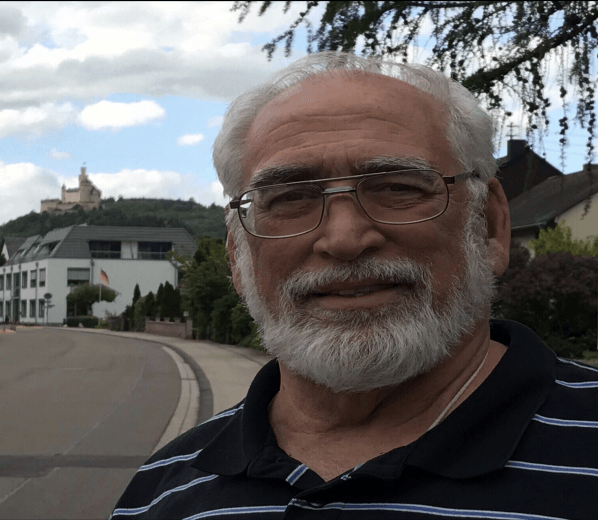
Mark Scriber
Stuart Gage was well-known in insect population biology and integrated pest management well before I met him as the incoming Chairperson of the Entomology Department at MSU in 1986. We instantly started a collaborative project at KBS in Agroecology under the NSF-funded Long Term Ecological Research initiatives. Stuart and I soon recruited a superstar in Environmentally- sound Agriculture named Karim Maredia to join us in the LTER project at the Kellogg Biological Station. Karim significantly increased the international respect for leadership in this field, with help from Stuart in following years. I was amazed by the ability of Stuart to envision the future of pest management via spatial analyses of insect populations as exemplified by the rapid implementation of state- wide gypsy moth monitoring and management based on a network of pheromone trapping. To my knowledge, this system was the first example of how we could actually, and quite accurately, predict where gypsy moth outbreaks would occur in the next year and the future. Stuart and I also published a book chapter using spatial analyses of host plant distributions and hybrid zone dynamics of my Papilio research, predicting where gene flow could occur with increased degree-day accumulations in the future with climate change. Stuart also initiated a multistate research initiative using spatial and temporal analysis of corn pollination phenology across North America with the increased concern for genetically engineered toxins in corn (to manage corn borers) regarding the negative non- target impacts monarch butterflies in their annual migrations. He later wrote a book on aero-biology and was almost lured away for an Endowed Chair at Ohio State University. Always 2-3 standard deviations ahead of his colleagues internationally, Stuart became fascinated by environmental sounds and basically created a completely new field of study which has been growing rapidly around the world. Stuart continued to provide scientific leadership in this field sound-ecology well past his official retirement from MSU. While Stuart's creative and insightful abilities to provide leadership in environmentally-sound agroecology were well ahead of his colleagues, there have been enough "early adopters" to initiate and implement several of his visions for the benefit of millions. He was also able to portray how climate-warming could alter the biology of pest species and their interactions with changing plant phenologies. We now realize how this climate warming not only affects agricultural pest and cropping management, but also how the increased population movements latitudinally bring new concerns about human disease vectoring by insects! An amazing visionary, with a powerful skill set in computers as well as biology, Stuart was unique and inspirational in many ways. I feel honored to have known him as a friend and colleague."
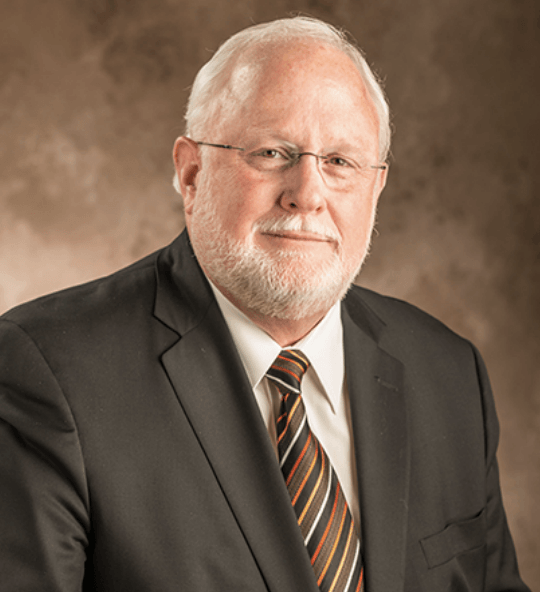
Fred Poston
Dr. Stuart Gage was an innovative and pioneering scientist. At his core, he was a broad naturalist who was intrigued by all interacting components of agricultural, natural and human living environment systems. In the early stages of Stuart’s career in entomology, he implemented a successful biological control system for cereal leaf beetle and went on to work on innovative management systems for several pests. Stuart developed remarkable skills in ecological modeling. He applied them to his research, including studying the annual introduction of pests over long distances on weather fronts. As a highly proficient modeler, Stuart developed a renown spatial ecology laboratory at MSU. His foresight in establishing a long-term insect monitoring program as part of the Kellogg Biological Station, Long-term Ecological Research project fostered the discovery of decades-long changes in populations of lady bird beetles and other important predators of pests in agricultural landscapes. This led to his work in soundscape ecology where he made recordings from around the world for measuring the diversity and health of the environment. As a profound entomologist and ecologist, Stuart had the ability to interact with a broad array of scientists and students. He was an amazing visionary, with a powerful skill set in biology and electronic technology. Stuart’s contributions to environmentally-sound agriculture have had very significant and ever-expanding positive impacts on overall quality of life.
Foundation History
Professor Bird’s colleagues, students and family organized the Foundation in 2022, in honor of his research, teaching contributions to the domains of Integrated Pest Management (IPM), Sustainable Agriculture and Sustainable-Equitable Development. These transdisciplinary contributions were made possible because of Professor Bird’s training in nematology, plant pathology, entomology, and horticulture.